Mitka’s rifle
The Painted BirdMitka’s rifle is the weapon Mitka takes from the Red Army camp for a secret attack on a village. The scene makes the rifle more than equipment: its removal, concealment, use, and return give private revenge a concrete procedure. Through the unnamed boy narrator, the weapon is seen both as a material object handled with care and as the means by which Mitka turns the camp’s military skill toward civilians.
Identity and Preparation
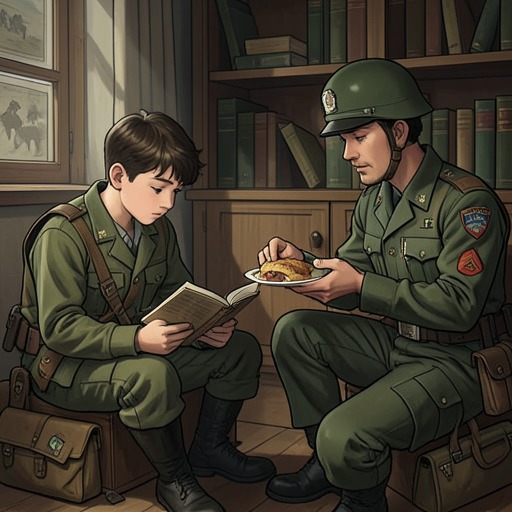
Mitka keeps the rifle behind his bed, inside a brown case. Before leaving camp, he draws out the weapon but leaves the empty case in its place and locks it so that it appears the rifle is still there. He also takes the telescope and a small tripod, checks his cartridge belt, and gathers field glasses. The rifle is thus part of a larger set of equipment, but it is the object whose absence must be concealed and whose presence makes the attack possible.
The preparations are deliberate rather than impulsive. Before dawn, Mitka wakes the boy and says only that he must dress quickly. The boy helps bind Mitka’s feet and pull on his boots; Mitka is in pain, but continues in haste. They wait until the other men are asleep, slip past the field kitchen and guards, and leave the encampment. The rifle’s movement out of camp is made possible by this quiet coordination and by the false appearance of the locked, empty case left behind.
Use in the Village
At the forest’s edge, Mitka chooses a tall tree near the fields. He and the boy carry the rifle and its equipment up through the branches, helping each other climb. Mitka arranges the branches to improve the view and make a concealed seat, then attaches the telescope and fixes the tripod. The rifle is not used in an open confrontation: its operation depends on distance, concealment, and the elevated position from which Mitka can watch the village.
After a first shot, the boy reaches for the binoculars, but Mitka keeps them beyond his reach. The boy imagines what has happened below, while Mitka reloads, pockets the spent casing, and continues observing through the binoculars. The distinction between what the boy can see and what Mitka sees through the optical equipment makes the rifle’s effects partly inaccessible to the child. A later burst of three shots is described through Mitka’s close attention to the telescopic sight and his steady handling of the weapon. From the tree, the boy understands the attack through the village’s reaction: confusion, fear, and the families’ efforts to take the dead inside.
The weapon also marks a limit in Mitka’s willingness to act. When the boy gestures for him to shoot a dog, Mitka refuses, first with surprise and then with disapproval. The rifle has already enabled an attack on people, but the boy’s request does not automatically extend its use to every living thing he points out. That refusal gives the weapon’s violence a specific boundary within the scene, even as the reason for the boundary is not explained.
Concealment and Return
After the attack, Mitka folds the tripod and removes the telescopic sight before descending. He buries the spent cartridges under moss and removes traces of their presence. Back at camp, the rifle is cleaned and returned to its sheath. These acts complete the same practical sequence begun with the decoy case: the weapon is taken, used, and restored while Mitka attempts to keep the excursion and its evidence hidden from the other soldiers.
The rifle’s return does not undo what has happened. That evening, Mitka is mild and cheerful as before and sings ballads about Odessa and gunners avenging mothers who have lost sons in the war. The soldiers nearby join the chorus; funeral bells can be heard faintly from the village. The contrast between the carefully cleaned rifle, the communal song, and the bells leaves the attack embedded in the ordinary rhythm of camp life rather than publicly acknowledged there.
Wartime Context and Significance
The rifle’s episode unfolds in a landscape already shaped by organized persecution and mass death. Earlier, the boy has seen trains carrying Jews and Roma pass through the forest, while villagers line the track and wave to them. He also witnesses the aftermath of a child’s attempt to escape one of the trains and later encounters ash and remains along the railway. These scenes establish the surrounding climate of violence and indifference; they are not presented as actions carried out with Mitka’s rifle, but they sharpen the contrast between mass violence encountered along the railway and the later, deliberately chosen act of retaliation.
The rifle’s importance lies in that change of use. It is military equipment taken from a camp, concealed from fellow soldiers, and turned against a village through a planned act that Mitka carries out alone with the boy as his companion and witness. Its technical features—the telescope, tripod, and field glasses—extend Mitka’s capacity to observe and strike from concealment, while the boy’s restricted view emphasizes the distance between operating the weapon and understanding its full consequences. The final return of the rifle to its case restores the appearance of order in the camp, but the bells from the village make clear that the object’s use has left consequences beyond the camp’s awareness.